AI Video Model Review: Realism, Motion, and Creator Workflow Fit
AI video tools have moved from experimental demos into everyday creative workflows. Marketers use them for product clips, social teams use them for short-form visuals, filmmakers use them for pre-visualization, and independent creators use them to test ideas before committing to manual production.
This third-party review looks at the WAN model family covered in the source article: WAN 2.1, WAN 2.2, WAN 2.2 Animate, and WAN 2.5. The original article framed the models as a fast-growing AI video lineup for cinematic generation, animation, and creator-friendly production. This review keeps that topic but removes the promotional tone. Instead of saying one platform or model is automatically “the best,” it evaluates where each model appears most useful, where claims should be treated carefully, and how creators can choose the right workflow.
For creators using Fylia AI, the closest practical access points are broad video tools such as AI Video Generator, Image to Video, AI Text to Video, and Video to Video. Fylia AI also has WAN-related article coverage, including The Complete Guide to WAN 2.1–2.5, Wan 2.5 Image to Video, and Wan 2.2 Animate.
Third-Party Review Verdict
Best for fast testing: WAN 2.1 Best balanced model in this lineup: WAN 2.2 Best for stylized animation and character motion: WAN 2.2 Animate Best for realism-focused image-to-video concepts: WAN 2.5 Best overall workflow: generate or upload a strong still image first, then move into image-to-video with controlled motion prompts
The WAN series is worth watching because it focuses on problems that matter in real video generation: motion stability, frame consistency, camera behavior, and visual realism. However, creators should be careful with exaggerated claims such as “film-ready,” “commercial-ready,” or “unmatched.” These models can produce impressive short clips, but final use still depends on prompt quality, platform implementation, output review, licensing terms, and whether the project requires exact brand control.
The strongest practical recommendation is this: use WAN models for rapid video concepting, image-to-video experiments, animated character tests, product-motion drafts, and short cinematic scenes. Do not treat them as a full substitute for editing, compliance review, or professional post-production.
What This Review Evaluates
This review focuses on creator-facing criteria rather than pure benchmark claims.
| Review Category | What It Means for Creators |
|---|---|
| Motion Stability | Does the clip avoid jitter, flicker, and inconsistent frame transitions? |
| Realism | Do humans, products, lighting, and environments feel believable? |
| Prompt Control | Does the model follow camera, subject, and action instructions? |
| Style Fit | Is the model better for realism, anime, product shots, or general concepts? |
| Workflow Speed | Can creators test many ideas quickly? |
| Production Risk | Does the output need heavy review for artifacts, brand details, or usage limits? |
This is not a claim that one model is universally superior. The right choice depends on whether you care more about speed, realism, stylization, or final polish.
Model-by-Model Review
WAN 2.1 Review: Fast, Lightweight, and Useful for Drafts
Best for: quick concept videos, social drafts, early motion testing, image-to-video experiments Main strength: speed and accessibility Main weakness: less detail and polish than newer versions
WAN 2.1 is best understood as the practical entry point of this lineup. It is useful when creators want to test a scene quickly rather than wait for a heavier model to render a more polished result.
For short-form creators, this matters. If you are testing 10 product-motion ideas, 10 camera directions, or several character poses, speed can be more valuable than maximum realism. WAN 2.1 is a good option for early-stage iteration because it helps creators decide whether a scene concept is worth developing further.
Where WAN 2.1 Works Well
- Fast text-to-video drafts
- Simple image-to-video motion
- Social content experiments
- Early storyboard movement tests
- Lightweight camera motion trials
Where WAN 2.1 Is Weaker
WAN 2.1 is less ideal when the clip needs high realism, subtle acting, premium product detail, or strong cinematic polish. It can be useful for deciding direction, but final campaign assets may need a newer model or manual finishing.
Third-party verdict: WAN 2.1 is a strong draft model. Use it when you want speed and iteration, not when you need the most polished output.
WAN 2.2 Review: Better Balance for Creator Production
Best for: brand videos, social ads, promotional clips, short cinematic concepts, product visuals Main strength: balance of stability and detail Main weakness: still needs review for artifacts and scene consistency
WAN 2.2 appears to be the more balanced option in the source article’s lineup. It improves on the lightweight feel of WAN 2.1 by aiming for better detail, lighting, and motion realism.
For creators, that makes WAN 2.2 the safest middle-ground choice. It is not only for experimentation, but it is also not so specialized that it only makes sense for high-end polish. It fits everyday creator needs: short brand clips, lifestyle product scenes, social media videos, and creator-driven visual storytelling.
Where WAN 2.2 Works Well
- Product-motion concepts
- Social media ads
- Cinematic short clips
- Lifestyle brand visuals
- Character-focused scenes
- Better lighting and object detail than fast draft models
Where WAN 2.2 Is Weaker
WAN 2.2 still needs human review. AI video models may create subtle frame inconsistencies, unnatural hand movement, warped objects, or camera drift. For commercial use, creators should inspect key frames before publishing.
Third-party verdict: WAN 2.2 is the best balanced model in this lineup for creators who want stronger quality without jumping immediately to the heaviest realism-focused option.
WAN 2.2 Animate Review: Best for Stylized Character Motion
Best for: anime-style clips, motion comics, character animation, stylized brand content, illustration-to-video tests Main strength: animation-focused motion and character transformation Main weakness: less suited to photorealistic product or live-action scenes
WAN 2.2 Animate should not be judged by the same standards as realism-focused video models. Its value is in stylized motion and character animation. It is especially relevant for creators who work with anime aesthetics, illustrated characters, motion comics, or character replacement workflows.
This model is useful when the goal is not “make this look like a camera filmed it,” but rather “make this character move in a stylized, controlled, animation-friendly way.”
Where WAN 2.2 Animate Works Well
- Anime-style short clips
- Motion comic panels
- Character pose animation
- Stylized brand mascots
- Animated avatars
- Illustration-based video tests
- Character replacement experiments
Where WAN 2.2 Animate Is Weaker
It is not the best choice for realistic product videos, cinematic live-action scenes, or subtle natural acting. If the project depends on realism, WAN 2.5 or another realism-focused model may be a better fit.
Third-party verdict: WAN 2.2 Animate is the specialty model. It is less universal than WAN 2.2, but much more useful when the project is character-animation focused.
WAN 2.5 Review: Strongest Realism Option in This Lineup
Best for: cinematic image-to-video, realistic motion concepts, product scenes, film pre-visualization, premium social clips Main strength: realism and cinematic visual quality Main weakness: heavier workflows may require more careful prompting and review
WAN 2.5 is positioned as the most advanced realism-focused option in the source article’s lineup. It is best used when creators care about cinematic lighting, more detailed environments, natural-looking motion, and stronger image-to-video results.
For a creator workflow, WAN 2.5 is most valuable when the still image is already strong. A weak starting image usually leads to weaker video. A strong first frame, clear subject, good lighting, and a focused motion prompt give the model a better chance of producing a usable clip.
Where WAN 2.5 Works Well
- Cinematic first-frame animation
- Product-motion scenes
- Realistic environment movement
- Short film pre-visualization
- Premium creator reels
- More polished image-to-video concepts
Where WAN 2.5 Is Weaker
Even with stronger realism, WAN 2.5 should not be treated as automatically final. Watch for unnatural physics, object warping, facial drift, and motion that looks impressive at first glance but breaks under repeated viewing.
Third-party verdict: WAN 2.5 is the best choice in this lineup when realism matters most, but it works best with careful prompts and high-quality input images.
Comparison Scorecard
| Model | Speed | Realism | Motion Stability | Style Flexibility | Best Use Case |
|---|---|---|---|---|---|
| WAN 2.1 | High | Medium | Good | Moderate | Fast tests and social drafts |
| WAN 2.2 | Good | High | Very good | Good | Balanced creator production |
| WAN 2.2 Animate | Moderate | Stylized | Good for character motion | High for animation | Anime, avatars, motion comics |
| WAN 2.5 | Moderate | Very high | Strong when prompted well | Good | Cinematic realism and premium clips |
Platform Review: How Fylia AI Fits the Workflow
The source article strongly promoted Flux Pro AI as the ideal platform. Since the platform branding has changed in the current workflow, this third-party review uses Fylia AI as the updated platform reference and avoids calling it the only or objectively best option.
The practical advantage of Fylia AI is that it organizes creator workflows around accessible image and video tools. Instead of forcing users to think only in model names, it gives them task-based entry points:
- AI Video Generator for general video creation
- Image to Video for animating still images
- AI Text to Video for prompt-first video generation
- Video to Video for transforming or restyling existing video inputs
That structure is helpful for non-technical creators. It also makes sense for a review article because the reader may not care about every backend model detail. They want to know which workflow solves their problem.
Best Workflow for Creators
Step 1: Decide the Output Type
Start by deciding whether the project is a fast social clip, a cinematic shot, a product scene, or a stylized character animation.
- For fast drafts, consider WAN 2.1.
- For general creator production, consider WAN 2.2.
- For animation or character transfer, consider WAN 2.2 Animate.
- For realism-focused image-to-video, consider WAN 2.5.
Step 2: Build a Strong Still Image First
AI video often works best when the starting frame is clean. If you are using image-to-video, create or select a still image with clear composition, stable subject identity, and strong lighting.
A good still frame should have:
- One clear subject
- Clean background structure
- Defined lighting direction
- Minimal visual clutter
- No fake text or distorted logos
- Enough space for the intended camera movement
Step 3: Write Motion Prompts Clearly
Avoid vague prompts such as “make it cinematic.” Instead, describe the camera, subject movement, environment motion, and mood.
Example:
Slow camera push-in, subtle subject breathing, soft hair movement, gentle background light shift, realistic motion, stable face, no sudden camera shake.
Step 4: Generate Several Short Tests
The first output may not be the best one. Generate several short variations, compare the motion, and choose the version with the cleanest frame consistency.
Step 5: Review Before Publishing
Check for:
- Face drift
- Hand distortion
- Product shape changes
- Floating objects
- Unnatural physics
- Background flicker
- Unwanted text artifacts
- Motion that breaks the original composition
This review step is essential for any serious creator workflow.
Use-Case Review
Social Media Clips
WAN 2.1 and WAN 2.2 are the most practical choices. WAN 2.1 is faster for testing, while WAN 2.2 gives more polish when a clip is meant to be published.
Best pick: WAN 2.2 for final social clips; WAN 2.1 for drafts.
Product Videos
WAN 2.2 and WAN 2.5 are better fits because product clips need cleaner lighting, stable object shapes, and believable camera motion. Always inspect product labels and proportions before publishing.
Best pick: WAN 2.5 for premium product visuals; WAN 2.2 for faster campaign drafts.
Anime and Stylized Animation
WAN 2.2 Animate is clearly the best fit in this lineup. It should be treated as a specialized animation model, not a general realism model.
Best pick: WAN 2.2 Animate.
Short Film Pre-Visualization
WAN 2.5 is the strongest choice when cinematic realism matters. WAN 2.2 can still be useful for testing shot ideas before moving into a more polished generation pass.
Best pick: WAN 2.5 for realism; WAN 2.2 for shot exploration.
Creator Thumbnails and Motion Covers
For moving thumbnails, animated covers, or short promotional loops, WAN 2.2 gives a good balance. WAN 2.5 may be worth using when the asset is important enough to justify extra review.
Best pick: WAN 2.2 for regular content; WAN 2.5 for premium covers.
Prompt Examples for Review Testing
Realistic Product Motion
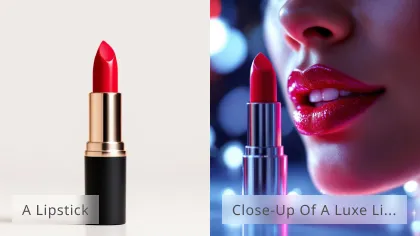
A luxury skincare bottle on a marble surface, slow 20-degree camera orbit, soft morning light, subtle reflections, realistic shadows, stable bottle shape, no text distortion, no extra products.
Cinematic Portrait Animation
Close-up portrait of a young actor in soft window light, slow camera push-in, natural blinking, subtle breathing, stable facial identity, shallow depth of field, no sudden expression changes.
Anime Character Motion
Stylized anime character standing on a rainy city street, smooth hair movement, gentle coat motion, dramatic neon reflections, stable proportions, clean line art, no frame flicker.
Social Media Clip
Modern creator desk setup, slow handheld camera drift, glowing monitor light, soft background motion, clean composition, vertical 9:16 framing, no text or logos.
Pros and Cons
Pros
- Strong model variety across speed, realism, and animation use cases
- Useful for short-form video, product concepts, and cinematic experiments
- Good fit for image-to-video workflows when the still image is strong
- WAN 2.2 Animate gives the lineup a clear stylized-animation specialty
- WAN 2.5 is a strong option for realism-focused creators
- Fylia AI offers task-based video tools that are easier for non-technical users to understand
Cons
- Promotional claims around “best,” “film-ready,” or “commercial-ready” should be treated carefully
- Output still needs review for artifacts, flicker, and identity drift
- Product and brand visuals require manual inspection
- Text, logos, and exact packaging details can be risky
- Newer WAN versions may exist beyond the 2.1–2.5 lineup, so readers should check current model availability before choosing
- Platform implementation can affect quality as much as the model itself
Final Recommendation
As a third-party review, the WAN 2.1–2.5 lineup looks strongest when judged by workflow fit rather than hype.
Use WAN 2.1 for quick testing. Use WAN 2.2 when you want a balanced model for creator production. Use WAN 2.2 Animate when the goal is stylized character animation. Use WAN 2.5 when realism and cinematic image-to-video quality matter most.
For Fylia AI users, the practical path is to start with the task: use Image to Video when you already have a strong visual base, AI Text to Video when the scene begins from a prompt, and Video to Video when the project involves transforming existing footage.
The WAN family is not a magic shortcut to perfect video. It is a useful set of AI video models for creators who understand the tradeoff between speed, realism, motion control, and review effort.
Related Articles
- The Complete Guide to WAN 2.1–2.5
- Wan 2.5 Image to Video: Next-Gen AI for Cinematic Creation
- Guide to Wan 2.2: Next-Gen AI Video
- Wan 2.2 Animate: Character Animation Guide
- Best AI Video Generator Models in 2026
- Wan 2.7 vs Wan 2.6: How Big Is the Upgrade?
People Also Read
- Wan 2.7 Review and Comparison
- Wan 2.7 Is Here: What Changed from Wan 2.6 and Wan 2.5
- Wan 2.7 Prompt Tips for Human and Realistic AI Videos
- The 2026 Image-to-Video Guide for Sea Imagine AI
- SeaImagine AI Text-to-Video Guide
- Veo 3.1 Video Generation Guide on HeyDream AI
- Gemini Omni Latest Info: What It Means for AI Video